
Keeping Learning Alive Through 1,000+ Days Without School
A Community Story from Rural Ethiopia Yohannes Bimrew
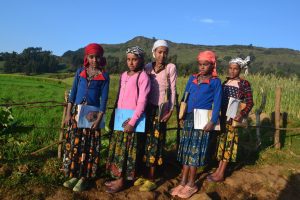
When the sun rises over the Choke Mountains in Gojjam, children used to begin their long walk to school. They followed narrow paths, crossed rocky ground, and faced cold, windy mornings just to learn.
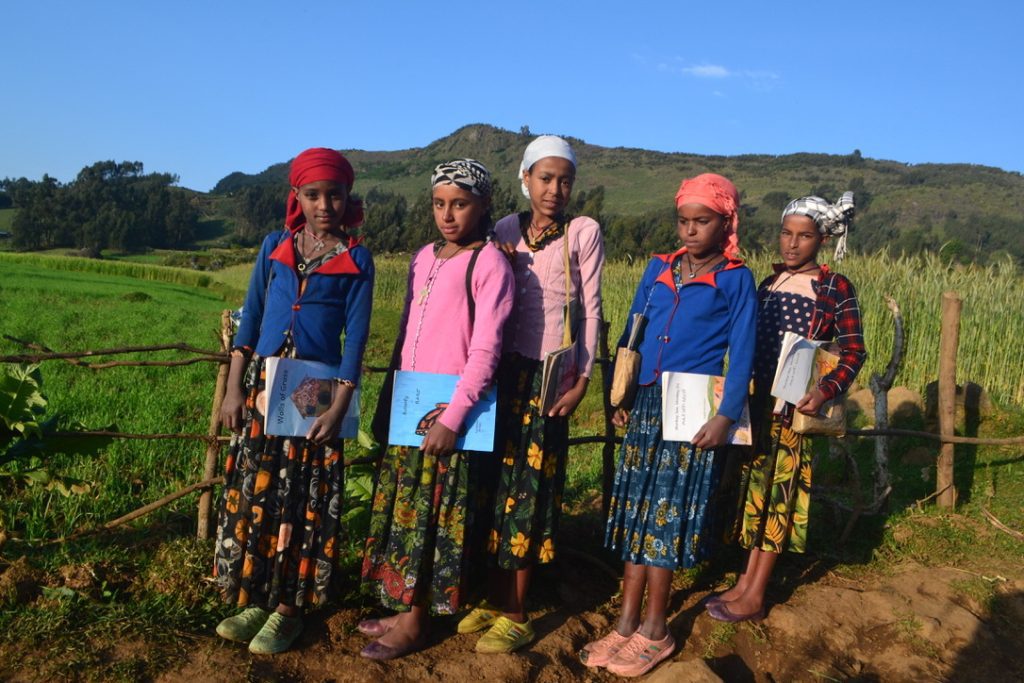
Birtukan was one of them.
Every day, she and her friends made that journey knowing it wouldn’t be easy. Still, they went. For families in rural Gojjam, education was never guaranteed — it was their only hope. Many parents had never been to school themselves, but they believed their children could have a different future.
That routine ended suddenly.
When conflict reached the area, the school closed. In a single day, learning stopped. The building that once held books and blackboards became unsafe. What was meant for education could no longer be used.
More than 1,000 days have passed, and children have not returned to class.
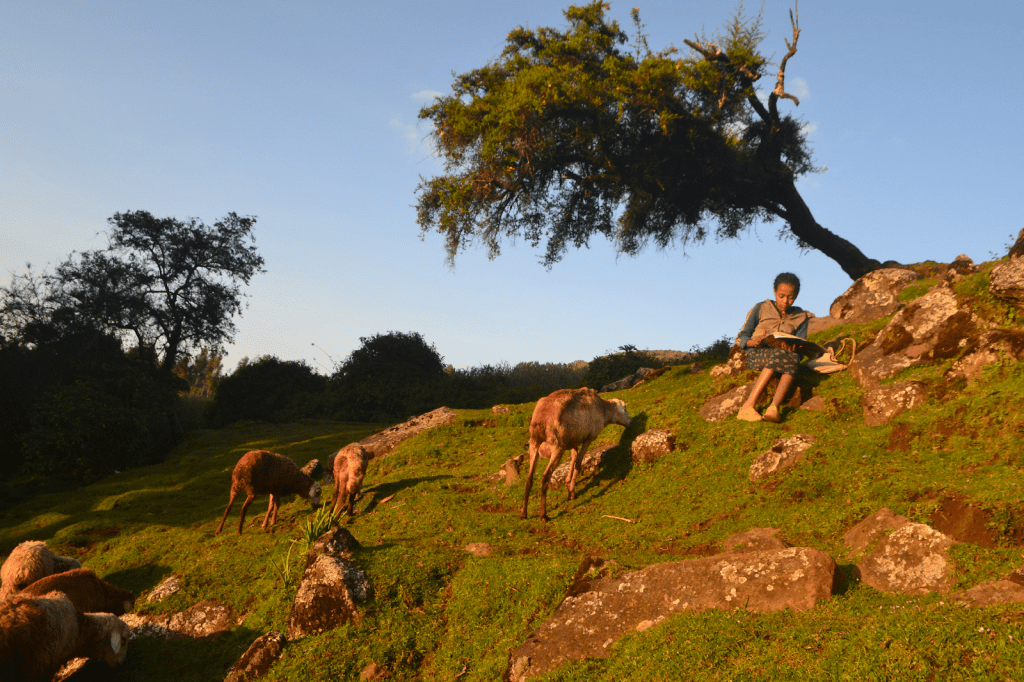
Today, Birtukan spends her days fetching water, caring for animals, and working on the farm. She carries responsibilities far beyond her age. Time that once belonged to learning and play is now filled with work. Still, she remembers school — and she still dreams.
What We Did as a Community
In Zelalem Desta, we didn’t want to wait.
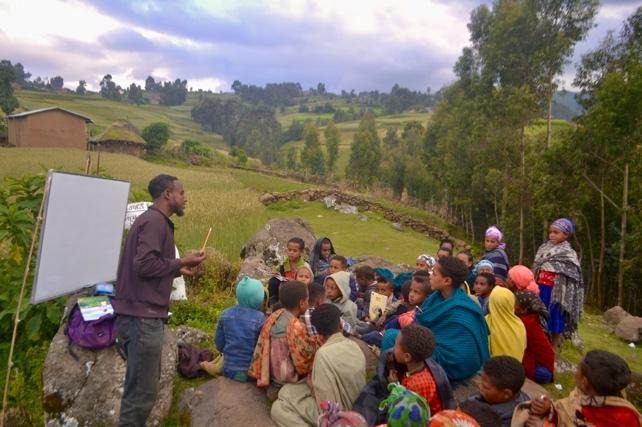
There were no classrooms. Schools could not be used. There were no learning materials, and in many cases, it wasn’t even safe to gather openly. But young people in the community — many of us who had completed secondary school or university — came together with one shared belief: children should not lose education completely.
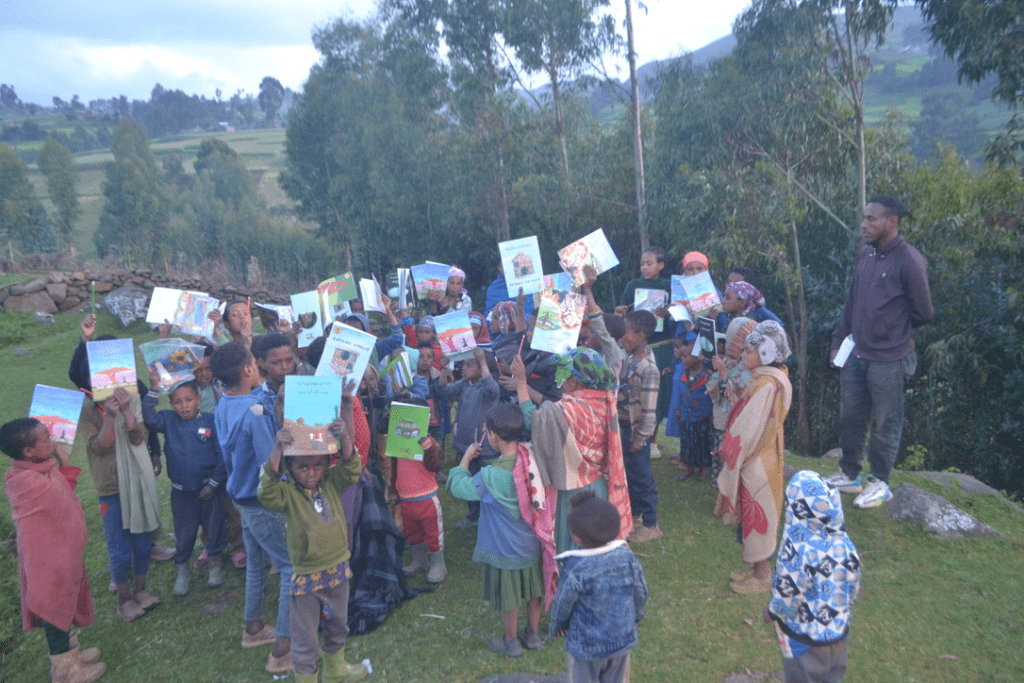
So we started small.
Children gathered in open spaces — under trees, beside rocks, wherever it was possible to sit and read. The goal was simple: to keep learning alive.
One of the local leaders is Halie, a graduate of Hawassa University in Education, who returned to support children who had been left without access to school. I helped coordinate the effort while staying closely connected to the community. I once studied in this same village school, and it was from this place that I had the privilege of becoming a Mastercard Foundation Scholar and later studying at EARTH University. Because of that journey, I understand deeply what education means and how much it can change a life.
In fact, before the conflict began, I spent my first university vacation here, working with the community to support around 60 students with basic learning materials. That effort was later stopped when the situation worsened. Now, we have returned — as a team and as a community — to continue what we once started.
Within four months, three community learning groups were formed. Today, around 90 children are learning again — slowly, simply, but consistently.
What the Open Hearts Big Dreams (OHBD) Books Changed
At the beginning, we had no books.
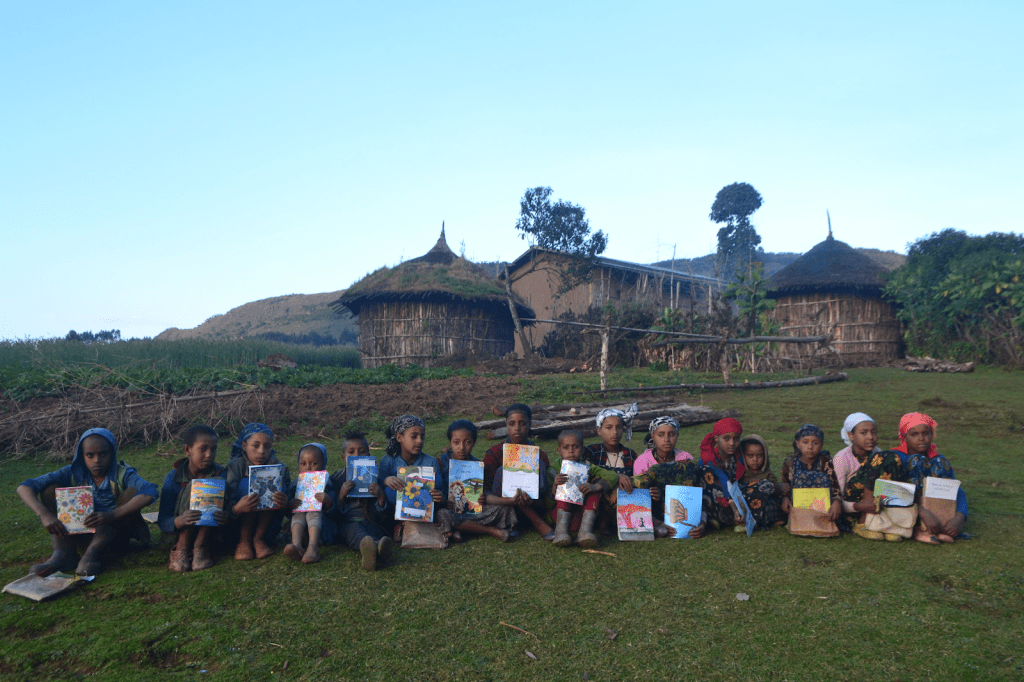
With the support of Open Hearts Big Dreams (OHBD), the children received their first 100 storybooks. For many of them, it was the first time they had ever held a book of their own. Later, another 250 books were added. The stories, written in Amharic and English, were colorful, familiar, and easy for the children to connect with.
This moment changed everything.
For the children, books made learning feel real again. For us as a community, they showed what becomes possible when local efforts are trusted and supported. We are deeply grateful to the OHBD team for walking closely with us and helping this work grow beyond what we first imagined.
To continue, we still need more learning and exercise books, teaching guides, and basic educational materials, along with ongoing support for local mentors who are part of the community.
Across Ethiopia, millions of children remain out of school because of conflict. This challenge is larger than any single place , but efforts like this remind us that real change often begins at the community level.
What Comes Next
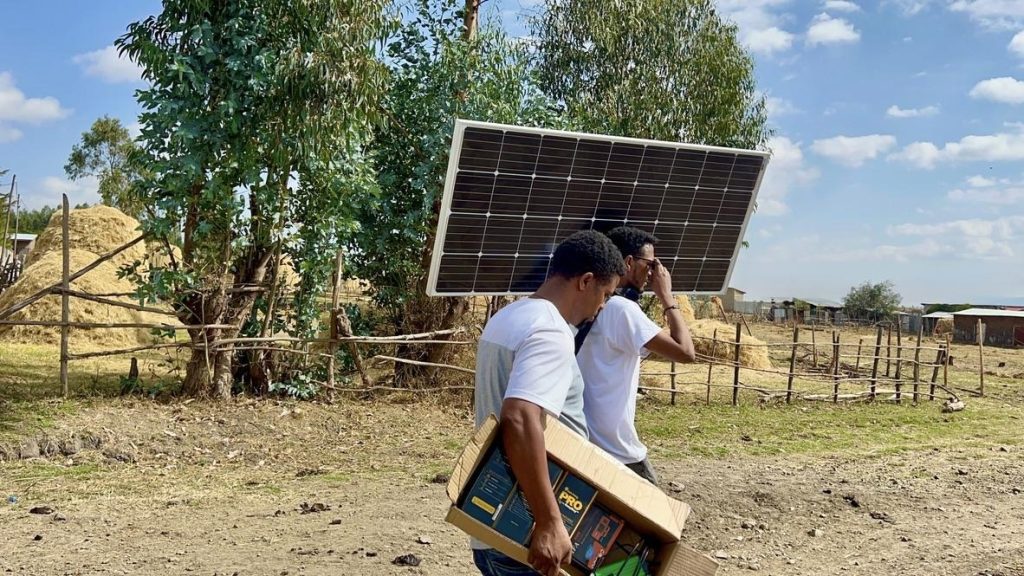
The next step is to build small, solar-powered reading and learning spaces that fit the everyday reality of rural communities.
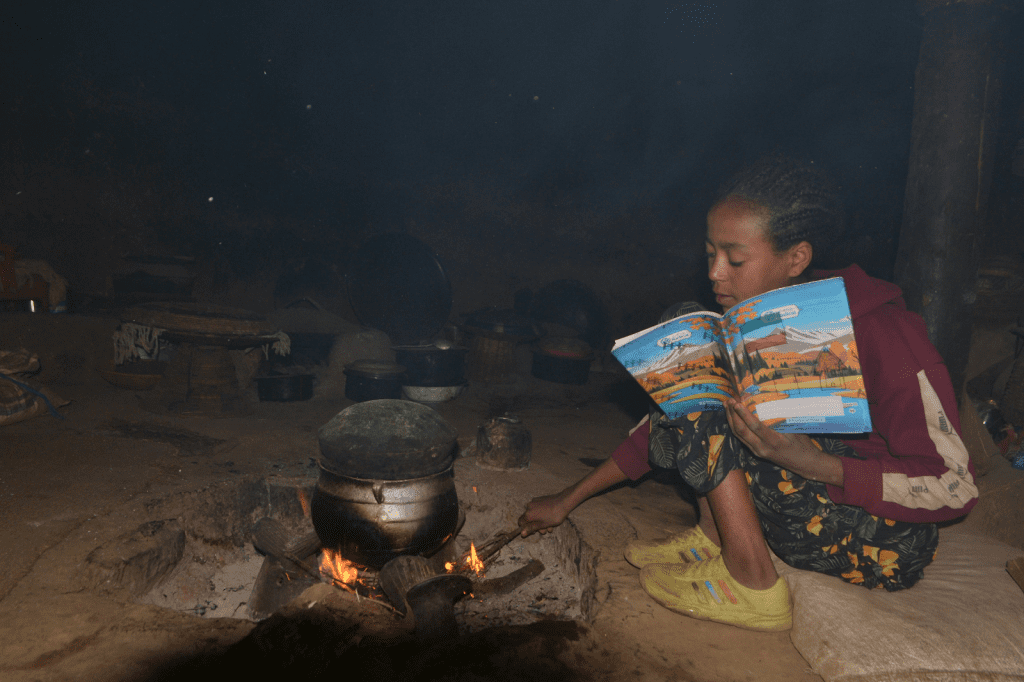
Through my work with HuluSolar, we are using renewable energy so children can continue learning in the evenings, when darkness would otherwise stop the day. These spaces are designed to be simple, practical, and shaped by the community itself.
Each center will bring together light, books, and shared learning tools in one place. They will include a small community library powered by solar lighting, a shared charging space for the community, and basic digital tools such as a projector with offline educational content for areas without internet access. The same solar systems will also support productive uses of energy, creating small income opportunities for young people who are already involved in teaching and supporting children’s learning.
We don’t have all the answers.
But we have learned this: when children have light, books, and a place to learn, education does not stop, even in difficult times.